
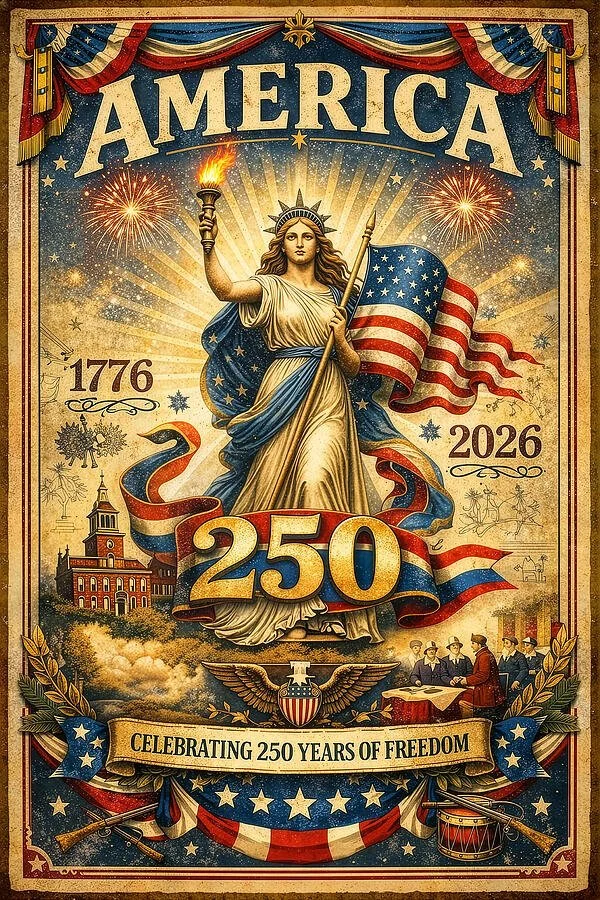
Celebrating freedom on the 250th birthday of our Nation with those people closest to you
America's 250th birthday on July 4, 2026—also known as the Semiquincentennial—is being marked through federal, state, local, and private celebrations across the United States. While many official events are planned, individual citizens can participate in ways that reflect their own interests, communities, and traditions.
Here are some of the primary ways you can celebrate:
Attend local Independence Day events
Most communities are expected to hold expanded Independence Day celebrations in honor of the 250th anniversary, such as:
Parades
Fireworks displays
Community festivals
Concerts
Historic reenactments
Food festivals
Veterans' ceremonies
Public readings of the Declaration of Independence
Many towns are incorporating the 250th anniversary into their annual July 4 traditions.
Visit historic sites
Many of you may choose to visit places connected to the nation's founding and history, including:
Independence National Historical Park
Liberty Bell
Independence Hall
National Mall
Mount Vernon
Colonial Williamsburg
Many museums and historic sites have planned special exhibits and educational programming for the anniversary year.
Participate in official Freedom 250 or America250 programs
You can join nationally organized activities, including:
Educational events
Public ceremonies
Historical exhibits
Community service projects
State celebrations
Volunteer opportunities
Patriotic concerts
For information on national initiatives and event schedules, click here.
Learn about American history
Many people choose to commemorate the anniversary by exploring the country's history through:
Reading the Declaration of Independence and the Constitution.
Visiting museums.
Watching historical documentaries.
Attending lectures or discussions.
Learning about the experiences of different communities throughout U.S. history, including Indigenous peoples, immigrants, enslaved people, veterans, and civil rights leaders.
Celebrate with family and neighbors
Traditional Independence Day activities remain central to the celebration:
Backyard barbecues
Picnics
Neighborhood gatherings
Sporting events
Family reunions
Sharing family stories about military service, immigration, or civic participation
Many families also display the American flag, decorate in red, white, and blue, and play patriotic music.
Perform community service
Some organizations are encouraging Americans to honor the anniversary through volunteer work, such as:
Cleaning parks
Supporting food banks
Helping veterans
Mentoring youth
Participating in neighborhood improvement projects
Donating blood
Assisting local charities
This approach emphasizes civic responsibility alongside celebration.
Explore your state's history
Each state has its own role in the nation's story. Many state governments, historical societies, and local organizations are hosting anniversary-themed events highlighting:
State founding stories
Local historical landmarks
Cultural traditions
Military history
Scientific and industrial achievements
Engage in civic participation
The anniversary also provides an opportunity to participate in civic life by:
Registering to vote if eligible.
Attending public meetings.
Learning about local government.
Discussing civic issues respectfully with others.
Joining community organizations.
Travel to major celebration sites
Several destinations are expected to host large-scale events, including:
Washington
Philadelphia
Boston
New York City
These cities are planning expanded programming that may include concerts, exhibitions, ceremonies, and fireworks.
Reflect on the nation's past and future
The semiquincentennial is also an opportunity for reflection. Many of you may choose to consider:
The ideals expressed in the Declaration of Independence.
How the country has changed over 250 years.
The achievements and challenges in U.S. history.
Their hopes and aspirations for the nation's future.
Because Americans hold a wide range of perspectives, celebrations may emphasize different aspects of the country's history and identity. The anniversary provides space both for celebration and for thoughtful engagement with the nation's past, present, and future.